NEWS
Apple Uses a Returned MacBook to Press OpenAI Hardware
Apple is using Chang Liu’s returned MacBook to seek a freeze on OpenAI hardware, while OpenAI blames leftover system access.

Apple told a San Jose judge on August 31 that a returned MacBook shows former engineer Chang Liu used a confidential circuit schematic at OpenAI. The laptop reached Apple’s examiner on August 21, after what the company called weeks of delay. Liu left Apple on January 22 and now works on OpenAI hardware.
Apple is using those findings to press for a preliminary injunction that would bar OpenAI, io Products, Liu, and hardware chief Tang Yew Tan from using Apple secrets while the suit proceeds, plus faster access to more machines.
The Laptop Apple Waited Weeks to See
Liu spent eight years at Apple as a senior system electrical engineer and resigned on January 22. His counsel sent a MacBook he still held after the suit began, through a vendor called Sync Forensics, to Charles River Associates. Daniel Roffman, a vice president in CRA’s forensic practice, took it in on Friday, August 21. His team imaged it on August 24 and began briefing Apple’s lawyers on August 26.
The machine’s computer name is “C’s MacBook Pro.” Roffman wrote that Liu’s user profile on it was created on March 14, that iCloud Drive files landed on April 11, and that the latest use he has seen is July 3, so the working window on this laptop runs from mid-March through early July.
THE MACBOOK CHAIN
- January 22, 2026: Liu leaves Apple. That night he messages Yu-Ting Peng, then still an Apple engineer, that he still has another computer, and adds five laughing-crying emojis.
- February 8, 2026: At 10:08 p.m. Pacific he writes that he can still reach Apple’s cloud repository, calling it “so funny.”
- August 21, 2026: The MacBook arrives at CRA. It is imaged three days later.
- August 31, 2026: Roffman signs a new declaration, and Apple asks the court to treat the first results as grounds for faster discovery.
Apple’s complaint, filed July 10 as Apple Inc. v. Liu, already alleged that a then-unknown login bug let Liu keep reading a third-party cloud store after AppleConnect, the company’s sign-in system, had been cut on January 24. Roffman’s earlier work counted over 240 downloads of Apple material from that store between February 8 and April 27, including at least 37 unique files, well after his last day.
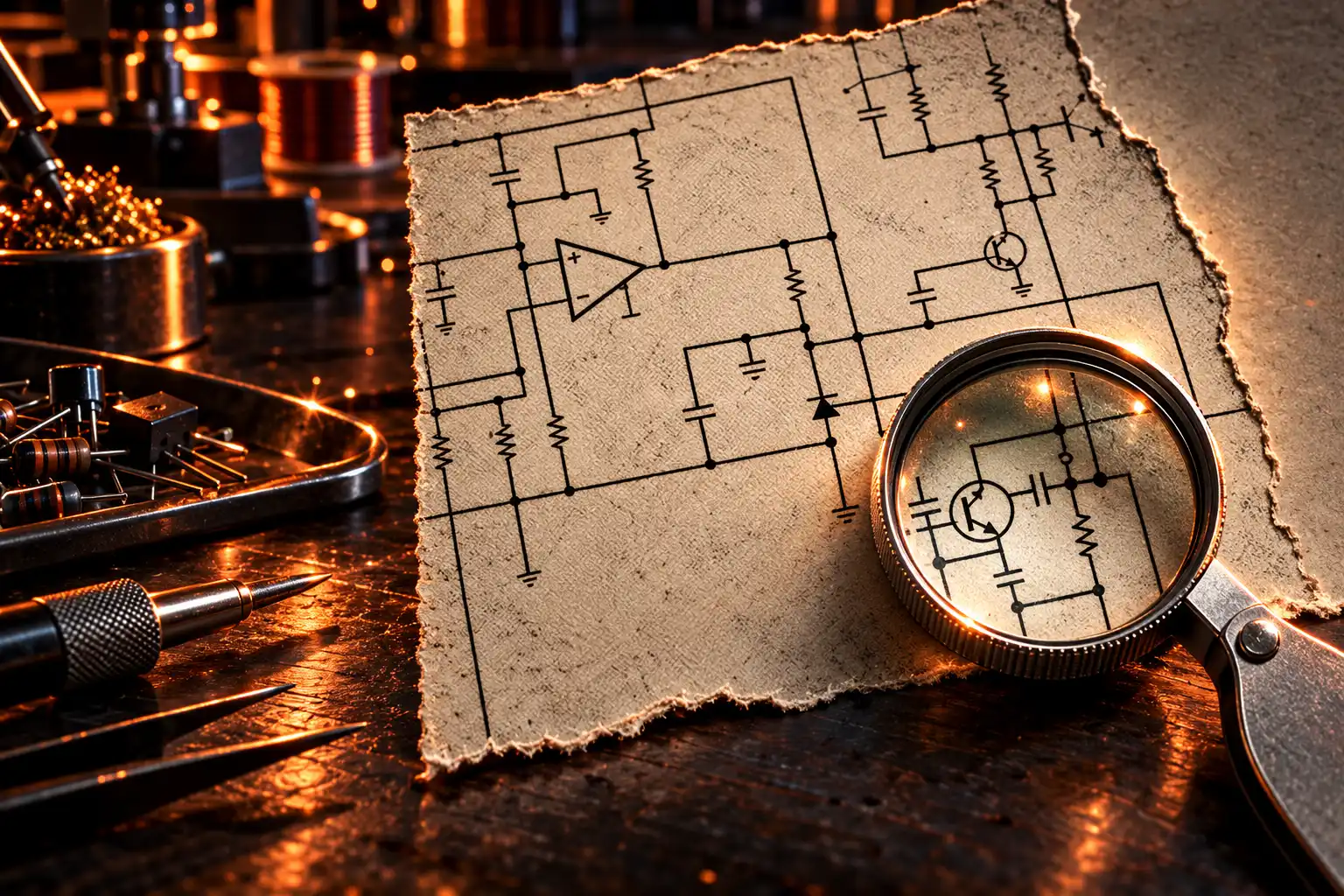
Liu Ran the Schematic Through LTspice in March
The new work is not another download log. It is a use log. In his forensic declaration on the returned MacBook, Roffman says a.raw output file recorded an LTspice run at 5:47:59 p.m. Pacific on March 18, under a file path that included the user name “changliu.”
LTspice is a free schematic and analog-circuit tool. Engineers use the Analog Devices LTspice circuit simulator to draw a circuit, run it, and read the waveforms. Apple says the input was a confidential Apple.asc schematic, and that messages around the same hour show Liu telling people he had run the simulation for power-conversion work. The.log,.net, and.raw files did not start on this MacBook. Roffman says they were created on a computer named “Mac Mini” and later synced through iCloud.
WHAT THE FORENSIC IMAGE SHOWED
| Item | When | Where it sat |
|---|---|---|
| User profile “C” created | March 14, 2026 | The returned MacBook |
| LTspice.raw written | March 18, 5:47 p.m. PT | Path under “changliu,” files born on a Mac mini |
| iCloud Drive files appear | April 11, 2026 | Synced onto the MacBook |
| Last observed use | July 3, 2026 | The returned MacBook |
| Cloud downloads of Apple files | February 8 to April 27, 2026 | Apple’s third-party cloud store |
Apple also wants that Mac mini. Roffman wrote that a circuit file used as simulation input generates new output files, and that an AI agent which “learned how to run” the job can leave logs on the box that ran it or on any service the agent touched. Apple’s brief argues that feeding a trade secret into an agent “may create irreversible and continually propagating uses of the trade secret.”
That is why a single returned laptop does not close the map. Roffman says he still needs OpenAI and io devices, and other accounts, to see who received the files, whether they were built into hardware work, and whether they were deleted.
A Court Order That Could Slow the Device Lab
The August 31 paper is styled as support for expedited discovery, not as a new lawsuit. The larger motion, filed August 3, asks Judge Edward J. Davila for a preliminary injunction against Liu, Tan, OpenAI Foundation, OpenAI Group PBC, and io Products. Apple’s proposed order would stop them from taking, holding, using, or sharing Apple confidential information, including material copied from email, network drives, cloud stores, and work MacBooks, while the case is live.
Apple listed four conclusions from the first pass on the laptop, and treated them as proof it is not on a fishing trip.
FOUR FINDINGS APPLE TIED TO THE MACBOOK
- The schematic: Liu did not only download a confidential Apple circuit file; he used it in his OpenAI work.
- The knowledge: Liu and others at OpenAI were well aware of his leftover access to Apple’s third-party cloud storage.
- The deletion ask: After he learned Apple was investigating, he sent instructions for destroying evidence to an OpenAI colleague who said she would comply.
- The named tool: He used a tool at OpenAI that shares a name with an internal Apple engineering application.
The deletion allegation is the one that travels. Apple says Peng, who left Apple for OpenAI on April 16 and is not a defendant, was drawn into that effort in June, and Roffman points to messages in which Liu talks about an investigation and tells others to “restore” their devices. Forensic images go stale. Apple’s ask is to image OpenAI and io machines now, not after a normal discovery calendar.
The MacBook represents the very limited information Defendants provided so far (and only after weeks of delay), and shows Apple is not conducting ‘fishing expeditions’ but that its trade secrets are being used and evidence is being destroyed.
Apple Inc. filing, Northern District of California, August 31, 2026
io Products is the hardware startup OpenAI bought in 2025 for $6.5 billion, the vehicle around Jony Ive and other Apple design veterans. Apple’s injunction papers pointed to reports that OpenAI’s first device is a screenless speaker. A freeze on the use of Apple circuit data would land on that lab, not on ChatGPT’s chat window.
The Residual Access Fight Inside iCloud
OpenAI’s public answer, posted August 3 under the heading “Apple is getting this wrong,” does not spend many words on LTspice. It spends them on offboarding. The company called the suit “careless, aggressive and oddly personal,” said Apple’s outside lawyers first emailed the wrong person after mixing up two Asian last names, and said Apple staff kept asking Liu for help finding files after January 22.
The messages OpenAI published show an Apple colleague still signed into Liu’s iCloud, trying to finish an AirDrop, and later asking him about power blocks as late as March 5, when another person on the thread called the exchange “highly irregular.” OpenAI’s read is that leftover access is an Apple problem, not a theft plot.
Apple now tries to shift the blame to “residual access”, but they also don’t disclose that this is a common issue with Apple which is caused by them failing to properly manage system access when people leave. What that means in practice is that former employees who are trying to do the right thing when they leave still have access to Apple files, despite not wanting them or even being aware of them.
OpenAI, company blog post, August 3, 2026
OpenAI says residual access is common and that a preliminary injunction is “based on false information and completely unnecessary because we do not have, nor want, any of their trade secrets.” On Tang Tan, who spent more than 24 years at Apple before becoming OpenAI’s chief hardware officer, the post says he has “always been clear with the team that we do not want, and must not use, any confidential information from other companies.”
Apple’s version of the same hole is narrower. It says the bug was unknown, that Liu celebrated it instead of reporting it, and that after the company found it, a limited number of other former employees may have been exposed, though as of a July 16 internal interview Apple had not identified anyone else who used it the way Liu did. Both things can be in the record at once: Apple failed to cut a cloud door, and Apple says Liu walked through it on purpose, then ran a schematic at his new job.
The louder problem for OpenAI is not the joke in the February message. It is the March simulation plus the restore-device texts. Leftover iCloud access can explain why a file was still reachable. It does not, on its own, explain an LTspice run under “changliu” on a Mac mini that later synced into the laptop Apple now holds.
More Than 400 Apple Alumni Now Work at OpenAI
Apple’s complaint says more than 400 former Apple employees now work at OpenAI. That headcount is not a legal conclusion. California generally lets people take their skill to a competitor. The live question is whether protected files, supplier recipes, or named internal tools moved with them, and whether OpenAI asked for that material.
THE PIPELINE APPLE PUT IN THE COMPLAINT
- The headcount: More than 400 former Apple staff now work at OpenAI, per Apple’s July 10 complaint.
- The vehicle: OpenAI bought io Products in 2025 for $6.5 billion and staffed it with Apple design and hardware veterans.
- The hardware chief: Tang Yew Tan, a 24-year Apple veteran and former vice president of product design for iPhone and Apple Watch, is a named defendant.
- The engineer: Liu, eight years in Apple electrical engineering, is the first named defendant, listed ahead of OpenAI itself.
Apple also accuses Tan of using insider knowledge, including secret project code names, while interviewing Apple staff, and of asking candidates to bring parts in for “show and tell” sessions that would reveal more than reverse engineering a finished gadget. OpenAI denies that Tan sought Apple secrets. Ive is not a defendant.
A trade-secret case against a hiring wave is a delay weapon even before a judge rules. Depositions of Tan, Liu, Peng, and OpenAI and io representatives, plus images of lab machines, would land on a group trying to ship a first device. Apple does not have to win the whole case this fall to make that calendar slip. It has to get Davila to open the devices Roffman has not seen.
What the October 1 Hearing Will Decide
Davila has set Apple’s injunction motion, its expedited-discovery motion, and OpenAI’s motion to dismiss for October 1 at 9:00 a.m. in Courtroom 4 at the San Jose courthouse. The Northern District of California docket lists the case as 5:26-cv-07078-EJD, a Defend Trade Secrets Act action filed July 10. A case-management conference is on the same day’s calendar. Defendants have already asked the court to throw the complaint out. Apple has already asked the court not to wait for ordinary discovery.
WHAT WE KNOW
- The laptop: Liu’s counsel delivered a MacBook on August 21; CRA imaged it on August 24; Roffman reported first results from August 26.
- The simulation: An LTspice.raw file on that image is time-stamped 5:47:59 p.m. Pacific on March 18, with a “changliu” path and sibling files born on a Mac mini.
- The calendar: Injunction, expedited discovery, and the motion to dismiss are all set for October 1 before Judge Davila.
WHAT IS UNCONFIRMED
- Model training: Whether an OpenAI agent or model stored, transformed, or still holds the schematic is alleged, not shown in the public redacted papers.
- Other alumni: Whether anyone among the 400-plus former Apple staff besides Liu took protected files remains an Apple claim, not a finding.
- The bug’s reach: Apple says it has not identified another former employee who exploited the login hole the way Liu did, as of July 16.
On October 1 in San Jose, Davila will hear Apple’s bid to freeze use of its secrets and to reach the Mac mini and OpenAI and io devices, the machines Roffman says he still needs if he is going to trace where the circuit file went after it left Apple’s cloud.
Disclaimer: This article is news reporting on a pending civil case and is for information only. It is not legal advice, is not a finding that any defendant stole trade secrets, and should not be used to make employment, litigation, or investment decisions. Readers with a legal interest in these facts should consult a licensed attorney who can review the sealed and unsealed filings. Dates, counts, and case status are those in the public papers as of September 2, 2026, and can change with the next order or brief.


Cornell Builds a Compact Gene Editor That Skips CRISPR

FKA Twigs Forces Shia LaBeouf to Void Their NDA

United Returns to Flagstaff After an $800,000 Grant

Reflection’s Beam Offers a Western Open-Weight Workhorse

VSS Hires a World Bank Adviser to Run Portfolio AI

Bravo Cuts Nathan Gallagher but Still Airs Below Deck

Apple Uses a Returned MacBook to Press OpenAI Hardware

Google AI Mode Adds Paginated Follow-Ups With Skip

Australia’s Teen Social Media Ban Still Lets Most Kids In

U2 Puts Carnaval de Luz After a Year of Ashes
-
 ENTERTAINMENT1 month ago
Bravo Cuts Nathan Gallagher but Still Airs Below Deck
-
 NEWS1 month ago
Google AI Mode Adds Paginated Follow-Ups With Skip
-
 NEWS1 month ago
Australia’s Teen Social Media Ban Still Lets Most Kids In
-
 ENTERTAINMENT4 weeks ago
U2 Puts Carnaval de Luz After a Year of Ashes
-

 GAMING1 month ago
Dawnwalker Hits 1 Million as Players Stretch Its Clock
-

 NEWS4 weeks ago
Goldman’s $1.2 Trillion AI Capex Needs $300 Billion in Revenue
-

 ENTERTAINMENT4 weeks ago
Hans Zimmer Takes the Next Level Across 30 Arenas
-

 NEWS1 month ago
When Chatbots Finish the Homework, Real Work Gets Scarce